
Created Metaphors shares practical, down-to-earth guidance on creative writing and metaphor craft for readers across the UK.
- 0123456789
- Angle Bd Abdelmoumen & rue soumaya, Résidence
- [email protected]
Created Metaphors shares practical, down-to-earth guidance on creative writing and metaphor craft for readers across the UK.
 By Callum Mercer
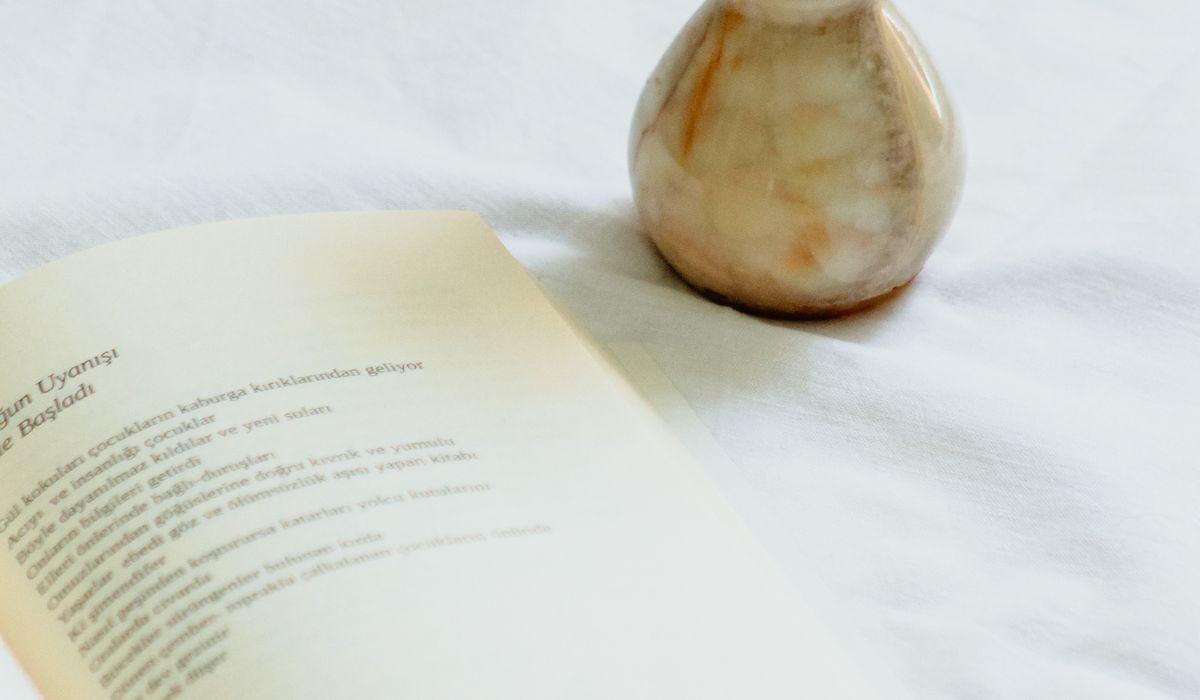
Most of us revise in silence. We read our drafts on a screen or a page, and the eye moves faster than the voice ever could. It skims, it fills gaps, it forgives. That is precisely the trouble. A poem's music — its stresses, its pauses, its small collisions of sound — exists in time, and only the ear measures time honestly. When you read aloud, you stop being a writer admiring your own work and start being an audience meeting it for the first time. Clumsy rhythms surface. A metaphor that looked elegant on the page can land with a thud in the mouth.
This is not a technique reserved for performance poets. It is a revision tool, and it costs you nothing but your own voice and a quiet room.
Free verse still has rhythm. It simply has one you invented, line by line, and you will not know whether it holds until you hear it spoken. Read your draft standing up, at a natural speaking pace, and notice where you stumble. Stumbles are data.
Pay attention to a few specific things:
Metaphor is where reading aloud earns its keep most. On the page, a comparison can hide behind its own cleverness. In the ear, it has to survive being said.
Try this: read the metaphor aloud and ask what picture actually arrives in your mind. Not the idea behind it — the picture. If you wrote a landscape of grief, the picture is a landscape, and the grief is nowhere in it. That is an abstraction dressed as an image, and your voice will flatten when you reach it. Flattening is a symptom. Revise until the line makes you lean forward.
Listen, too, for metaphors that quarrel with their neighbours. A poem that gives us a ship in stanza one should be cautious about offering us a cathedral in stanza three. Images can coexist, but they should share a weather. Mixed metaphors are easy to miss when reading silently, because the eye reads them as ideas. The ear hears them as two rooms with no door between.
And check the sound of the comparison itself. If the vehicle of your metaphor is a long, blunt word and the tenor is soft, the line will clang. A metaphor is not only a meaning; it is a mouthful. Say it and see whether it tastes of what it describes.
Record your reading — a phone voice memo will do — then walk away from it for a day. When you return, listen while doing something else. Wash up. Fold laundry. Do not sit hunched over the page following along. The point is to listen the way a reader will read: partially, in a distracted world.
This is the most useful test I know. Wherever your attention drifts, the poem has lost you. Mark that spot. Drift is almost never random; it happens at the line that explains too much, the metaphor that overstays, the stanza that repeats what we already understood.
Then listen a second time with your finger on the page and note three things: the exact word where you lost interest, the line that made you wince, and the moment that genuinely surprised you. The first two are your revision list. The third is the poem telling you what it is actually about — lean into it.
Read one poem aloud every day, preferably someone else's. You will absorb rhythms by ear far faster than by analysis, and you will begin to hear your own false notes sooner. Read your work to a friend, to a room, to an empty kitchen. The voice is the oldest editing tool we have, and it has been waiting patiently for you to use it.


We are not gonna make spamming
