
Created Metaphors shares practical, down-to-earth guidance on creative writing and metaphor craft for readers across the UK.
- 0123456789
- Angle Bd Abdelmoumen & rue soumaya, Résidence
- [email protected]
Created Metaphors shares practical, down-to-earth guidance on creative writing and metaphor craft for readers across the UK.
 By Thomas Hargreaves
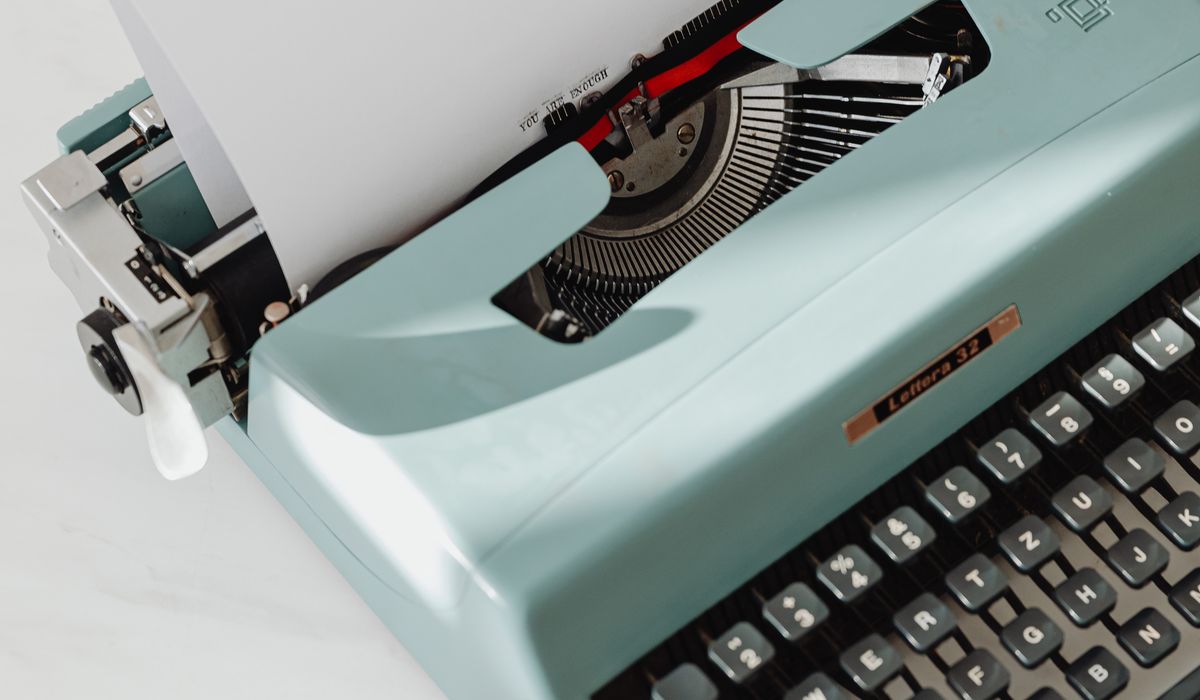
Readers do not believe sentences. They believe pictures. When you write "we deliver excellent customer service", the reader's brain receives an abstraction it cannot hold, so it quietly discards it. The phrase sounds like every other phrase they have skimmed past this week. Nothing in it snags the imagination.
Now consider this: "Your parcel arrives before 9am, or the courier knocks a fiver off your next order." Suddenly there is a van, a doorstep, a clock, a note in your hand. The claim has become something the reader can see — and what the mind can picture, the mind can believe. That is the whole craft of concrete detail in persuasive writing. It is not decoration. It is the mechanism by which a promise becomes credible.
A useful test for any abstract noun: could you post it? You can post a shoebox, a sample pot, a keyring. You cannot post "innovation" or "convenience". When a sentence leans on words you could not wrap in brown paper, stop and ask what physical object sits behind it.
Compare these pairs. On the left, fog. On the right, something the reader can touch.
Notice that the concrete version is not necessarily longer. It is simply more particular. Particularity is what makes a sentence feel true, because it is the one thing a lazy competitor cannot copy by accident.
Specific nouns get you halfway. Vivid verbs finish the job. Weak copy leans on is, provides, offers and helps — verbs that describe a state of affairs rather than an action. Strong copy uses verbs with muscle and direction: folds, tightens, unclogs, sharpens, halves.
Watch the difference. "Our app helps you manage your money" is grammatically fine and emotionally dead. "Our app rounds up every purchase and drops the spare change into a savings pot before you notice" gives the reader a sequence, a cause and an effect. They can watch it happen.
One caution: vivid verbs should not become theatrical. "Our app obliterates your spending habits" oversells and loses trust. The sweet spot is the verb a friendly expert would actually use over a kitchen table.
Vague copy hides behind round numbers and anonymous claims. Concrete copy names things. Not every detail needs a figure, but the ones you choose should carry weight.
Specific numbers beat sweeping ones. "Thousands of happy customers" prompts a shrug. "We have fitted 1,847 front doors in Sheffield since 2019" prompts a calculation in the reader's head — and that tiny moment of mental arithmetic is the beginning of trust.
Named details do similar work. A street, a season, a material, a time of day. "Warm on a February morning" is more persuasive than "keeps you warm", because February carries cold and dark in its pocket, and the reader supplies the contrast themselves.
It helps to think in threes: a number, a name, a moment. Anchored in all three, a sentence feels reported rather than written.
Readers do not buy benefits. They buy the moment a benefit lands in their own life. Your job is to stage that moment in a single concrete scene.
Each of these pictures a person doing something. That is the difference between a claim the reader evaluates and a scene the reader inhabits. Inhabited scenes are far harder to argue with.
Concreteness has a limit, and good writers respect it. If you describe the cotton count, the stitching, the dye lot and the delivery van in a single paragraph, the reader loses the thread. Detail should serve the one thing you want them to picture, not prove how thoroughly you researched it.
A reliable edit pass: read your draft aloud and mark every sentence that contains no object, no number, no place and no action. Those are your candidates. Rewrite three of them; delete the rest. Then check that each concrete detail earns its place by making the central promise more believable, not merely more decorative.
Metaphor works beautifully here too, provided it is grounded. "Like a house key for your inbox" lands because both halves are things you have held. Reach for the tangible comparison, then get out of the way. Persuasion is not built from adjectives. It is built from doorsteps, clocks, fivers and February mornings — the furniture of a real life, arranged so the reader can see themselves sitting in it.


We are not gonna make spamming
